


The Kingdom of Westphalia was established after the signing of the Tilsit Treaty. It was formed by combining three areas into one state. It includes lands of Prussia, part of Berg, Munster and East Frisia.
Because of the fact that only a part of the territory of these areas was included into the new Kingdom there was added Hesse-Kassel, Braunschweig and Hanover.
By the Decree of November 15, 1807 Napoleon secured the throne for his younger brother Jerome Bonaparte. The capital of the new state was the city of Kassel.
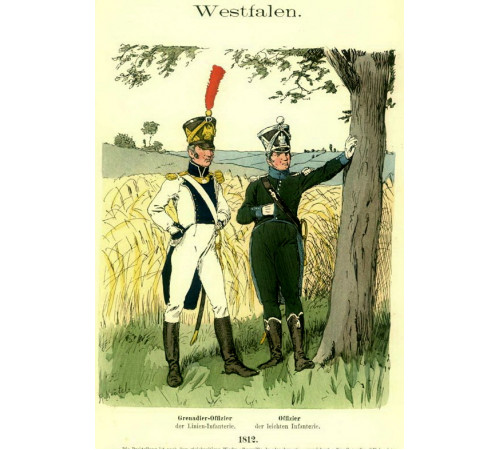
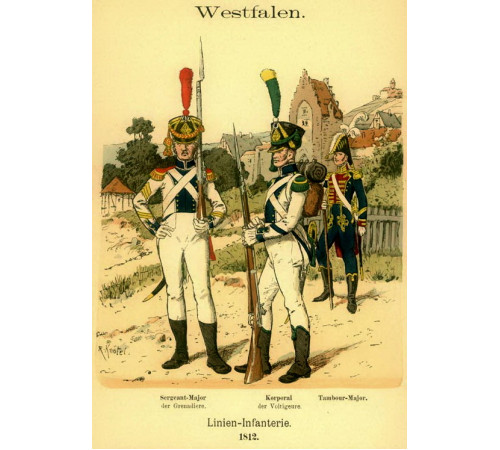
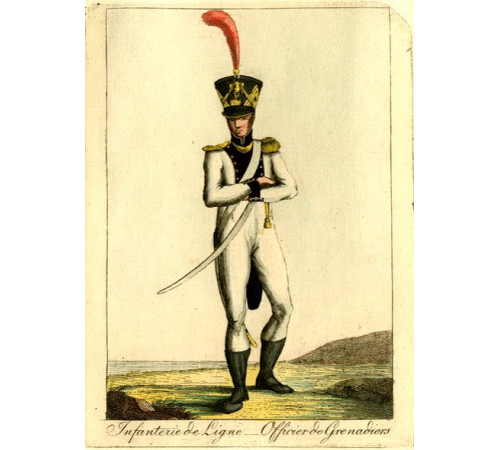
The army of the Kingdom of Westphalia was created as a model for other German states. It was created by the French system, but the officer corps was drawn from former officers of the United States. The basis of the army consisted of Hessians, but in the top positions there were French officers.
Not all of the officers of the attached lands went into the army of the new state. A significant part of the officer corps of the army of Hanover went to the UK and joined the established there King's German Legion.
The basis of the model army was the disbanded part of Hessen-Kassel, the Germans of not the Prussian origin, who were captured by the French in 1806. But a large part of the army was complete on account of conscripts and volunteers.
By 1812, for the Russian campaign there was formed a Corps with well equipped and trained soldiers. The King Jerome Bonaparte became the commander of the 8th (Westphalian) Army Corps.
But he did not have the leadership talent of his brother so Major-General of the French service Dominique Joseph R. Vandam helped the King in fact to command the corps.
The second line regiment was formed from the parts of Hesse-Kassel, volunteers and conscripts of the newly united land. The regiment consisted of 3125 people to 1812.
There were three drill and 1 reserve battalion. In turn, the marching battalion consisted of 1 Grenadier, 1 Voltigeurs’ and 4 fusiliers’ companies with 140 people in each. The spare battalion consisted of 4 fusiliers’ companies with 140 people in each.
The regiment was a part of the 23rd Infantry Division of Major-General Baron Jean Victor Toro of the first brigade under the command of Brigadier General F. Damme.
On June 25, 1812 the 2nd line infantry regiment exposed the 1st, 2nd and 3rd battalions under the command of Colonel Baron Friedrich Wilhelm von Fyullgroff to the Russian campaign.
In the ranks there were 67 officers and 2400 established men.
The regiment fought at Valutina Mountain on August 19, 1812, at Borodino on September 7 and on the Berezina on November 26-28.
In 1813 the regiment took part in the besiegement of Danzig on January 16 - 29 November.
After Napoleon's defeat the remnants of the army were disbanded and returned to civilian life.
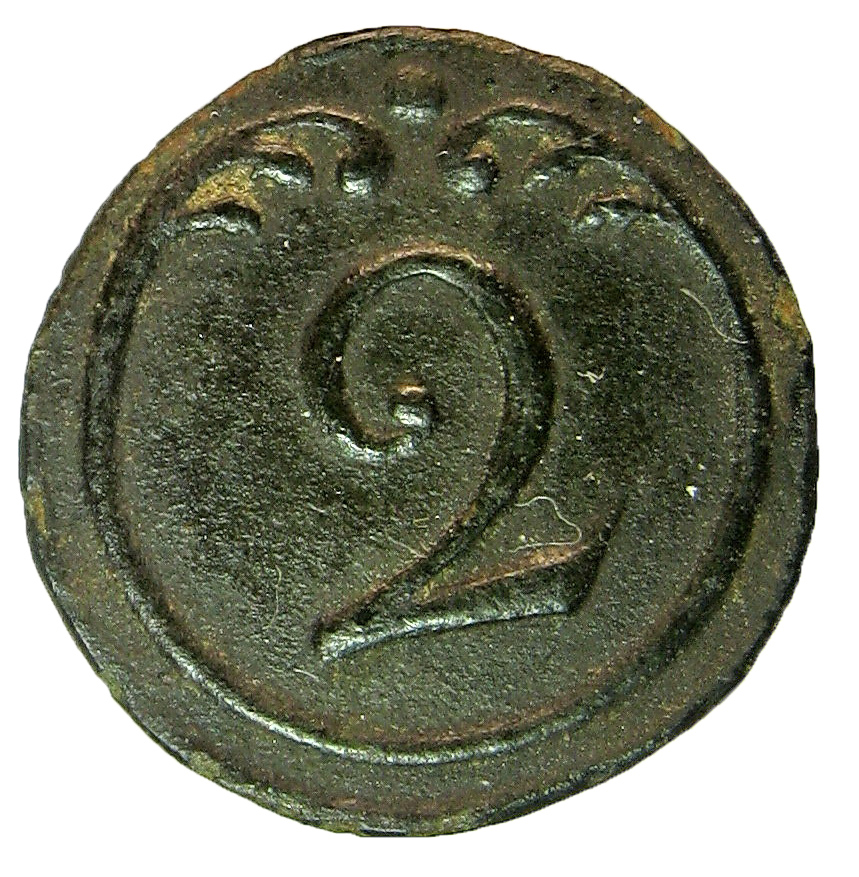
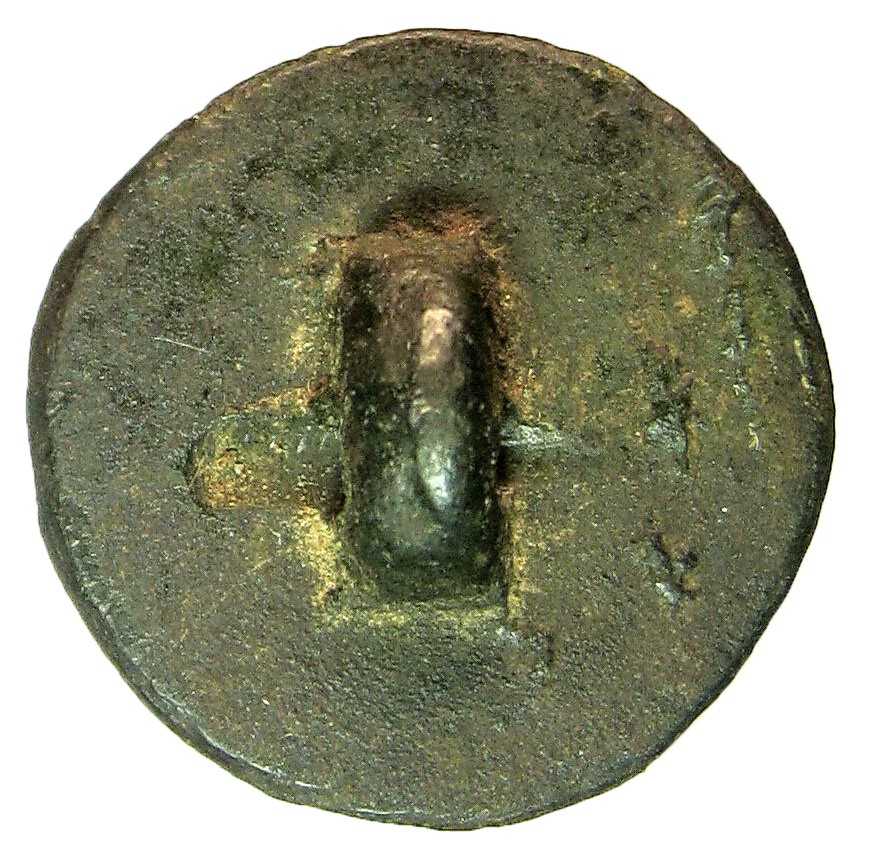
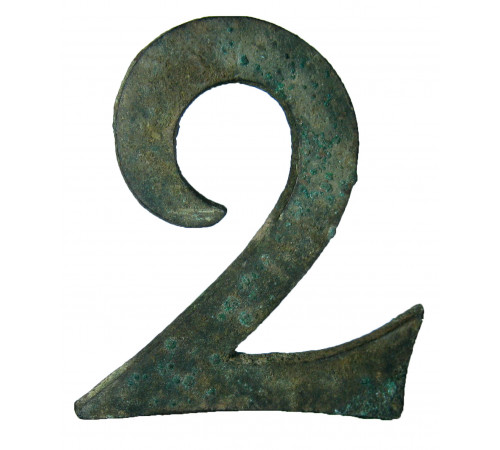
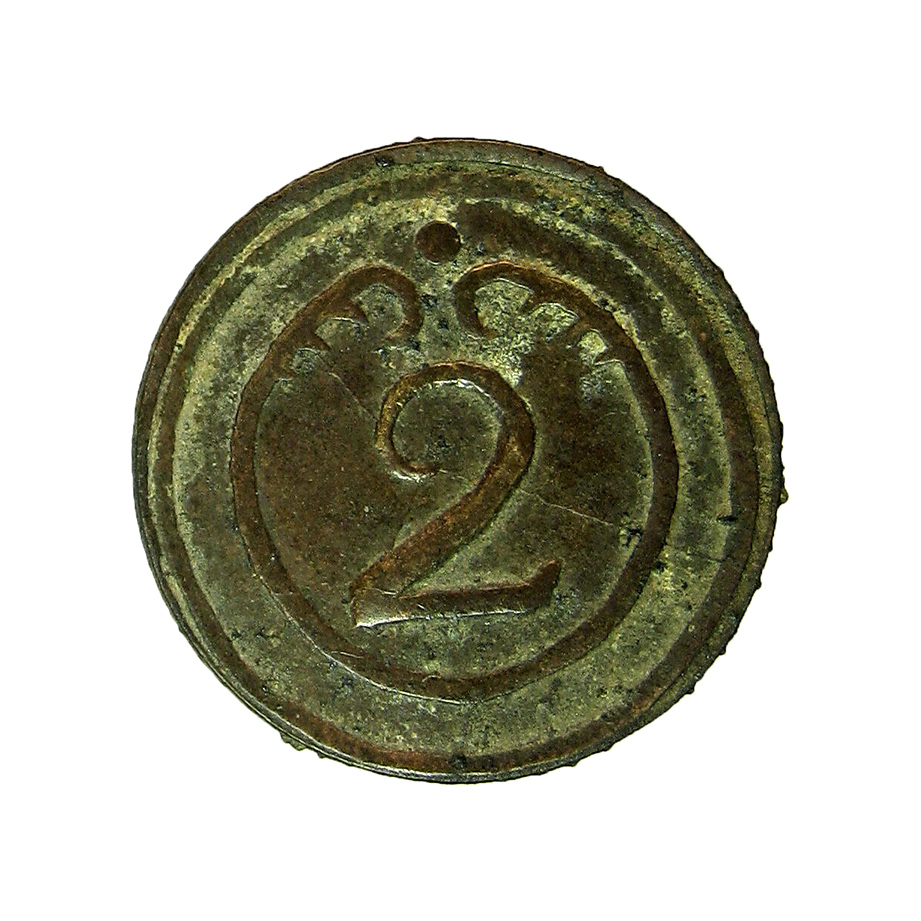
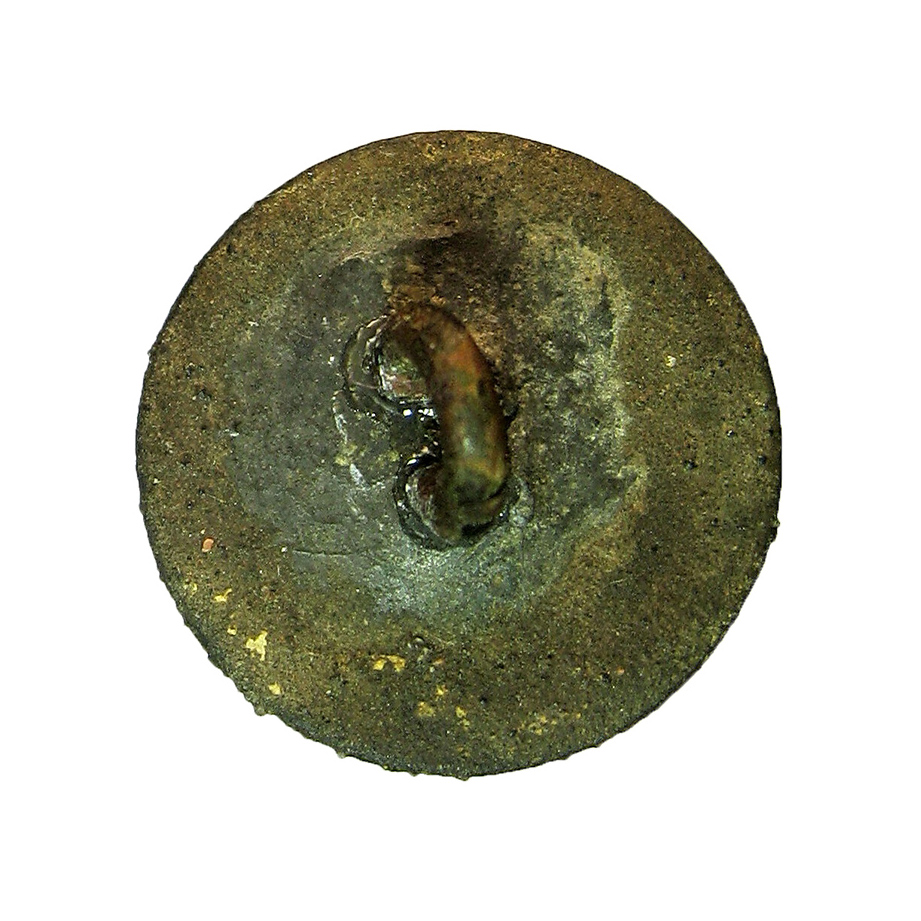
The buttons are made by casting, followed by pressing a figure with the number of a regiment and stylized laurel branches on them. The buttons of the infantry regiments of the Kingdom of Westphalia are very similar in style and drawing-to the buttons of the Polish infantry regiments. At the museum’s uniforms there is a visible inherent feature of Westphalian regiments- the soldered "ear" for attachment to a uniform.
But the style of writing numbers and a thick molded " ear " show us the ownership of these buttons not to the Polish but to the Westphalian regiments. Therefore, it is theoretically possible to assign these buttons to the regiments of Westphalia. The writing of the numbers may also differ from each other, but they are the same for "eyelet" of the attachment.
The number of buttons on the uniform of infantry’s soldier reached 40 pieces. The Shako sign was made of brass by forging and had the shape of a rhombus in the classic French style.
The Regimental buttons of the 2st Line Infantry Regiment of the Westphalian army are rare, so their rarity can be evaluate as R 4 by the rarity scale from 0 to 5.
The officers’ buttons are found only in single copies and we can assess their rarity only conditionally.
There are no reviews for this product.
No questions about this product.