

May 18, 1808 Emperor Napoleon signed a decree which established the Portuguese Legion. He was supposed to include six infantry regiments, 2 regiments of cavalry and artillery battery. But to 1809 they could only form 5 infantry regiments. Due to the different circumstances in 1811the legion was reduced to three regiments of the infantry and one cavalry chasseurs’ Regiment.
The 3rd Legion was organized in 1808.
There were mostly Spaniards and only 143 people of the Portuguese.
Under the command of Colonel Montego there were 37 officers and 1264 lower rank to June 1, 1812. The regiment was consisted of only fuzilernyh companies. The 3rd Legion was a part of the 3rd Brigade of 6th Infantry Division of Major-General Claude Earl J. A. Legrand of the Second Army Corps of Marshal Oudinot.
The regiment participated in the Battle of Berezina.
In the propulsion units that were heading to Russia were:
- The 3rd marching battalion of the Second Army Corps - 58 lower ranks.
- The marching company of the Second Army Corps - 64 lower ranks.
The 3rd Portuguese Legion was disbanded in 1813.
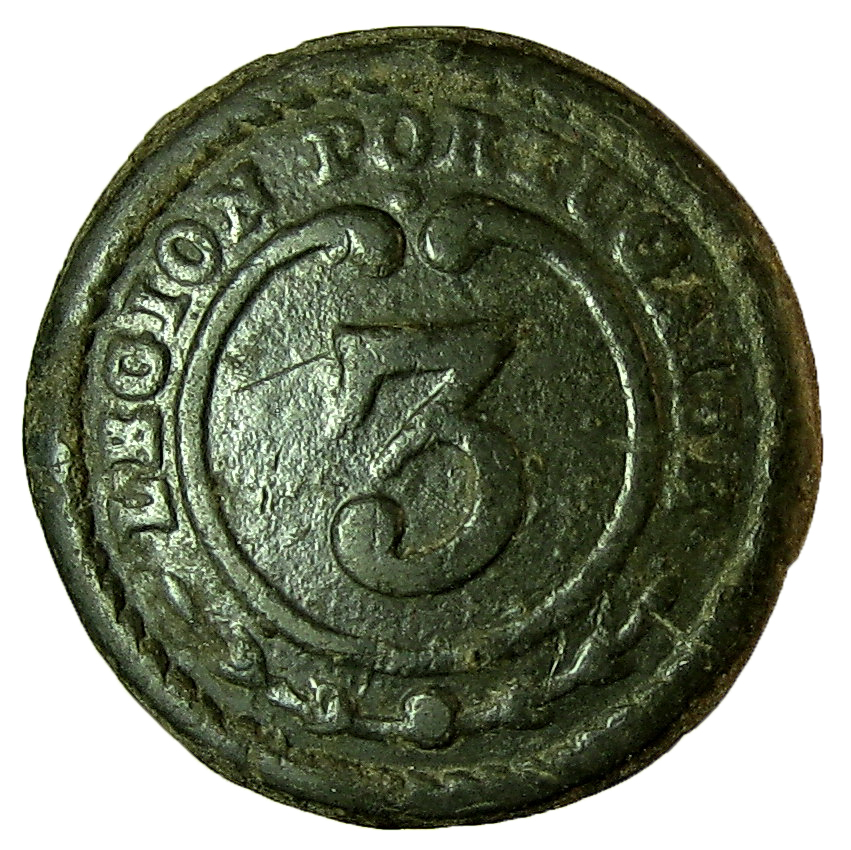
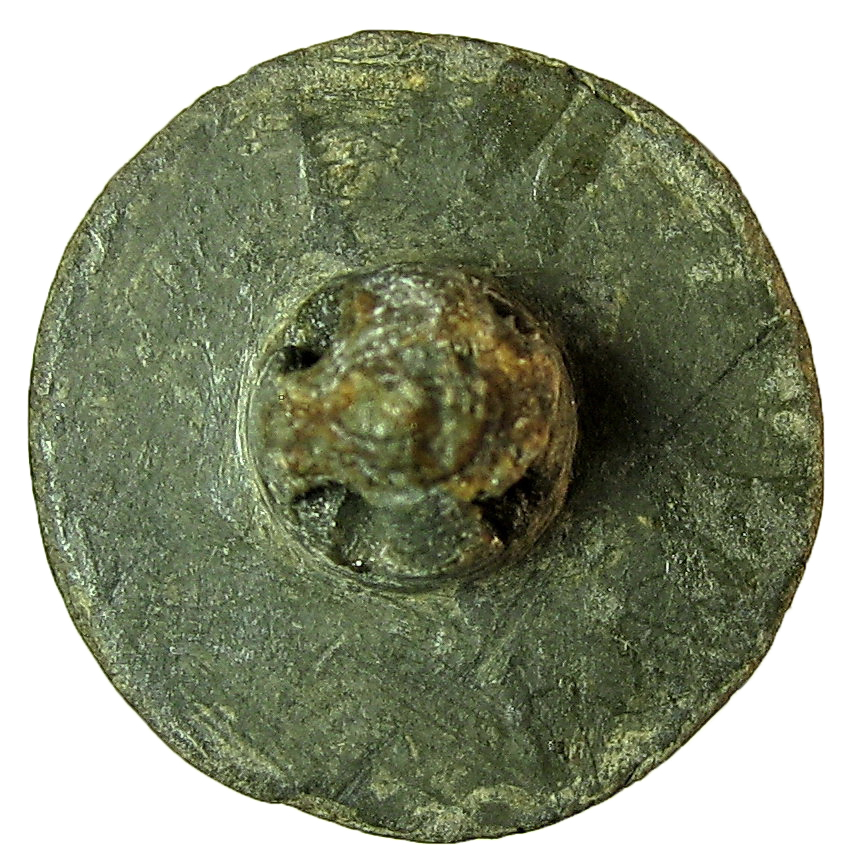
Large and small buttons third Portuguese Legion of the French army.
Buttons were produced by a casting in the metal molds. Picture on the buttons symbolizes two laurel branches, by which the Roman legions were honored, as a symbol of victory and glory. The numbers denote the number of the regiment, which belonged to the soldiers.
The most common finds in the field of bivouacs and battles are just buttons of the uniform, which are numbered the regiments of the Grand Army. It is also a doubtless fact of finding the buttons and other items of the army in villages and at homes which were existed during the war in 1812.
A huge number of soldiers of the Grand Army were killed not in the battles and skirmishes, but simply on the way of retreat. They were captured and were staying in the homes of local residents as the labor force. During and after the war a large number of Cossacks, who capturing a lot of prisoners just sold them to landlords as tutors and servants.
Buttons were the necessary thing in the economy and had worn for a long time by the local population. Come somewhere wearing a gorget from the trophy officer’s uniform was a special chic. Because of that there is such a great number of different buttons on the ground of old villages and farms.
Regimental buttons with the number 3 and the word "Legion Portugaise" are not very common, so I think you can put R 3 using the scale of rarity from 0 to 5.
Buttons of smaller diameter are almost never found, it is likely because of the great ability of time and temperature differences to destroy. It is a so-called "tin plague”.
Tin buttons and other parts of ammunition which made of tin just crumble, becoming completely inaccessible to historians and collector. Officer’s buttons are found only in single copies and evaluate their rarity we can only theoretically.
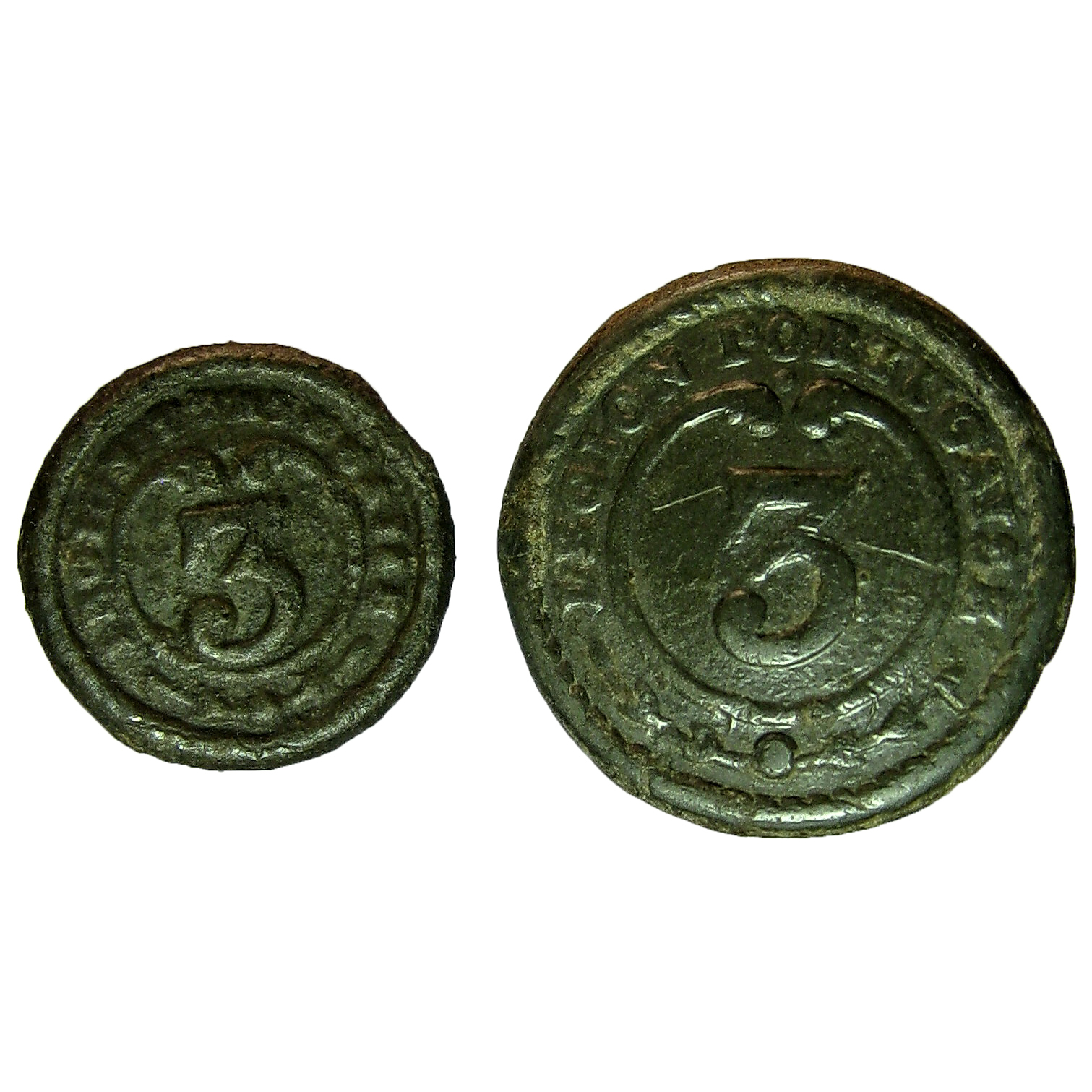
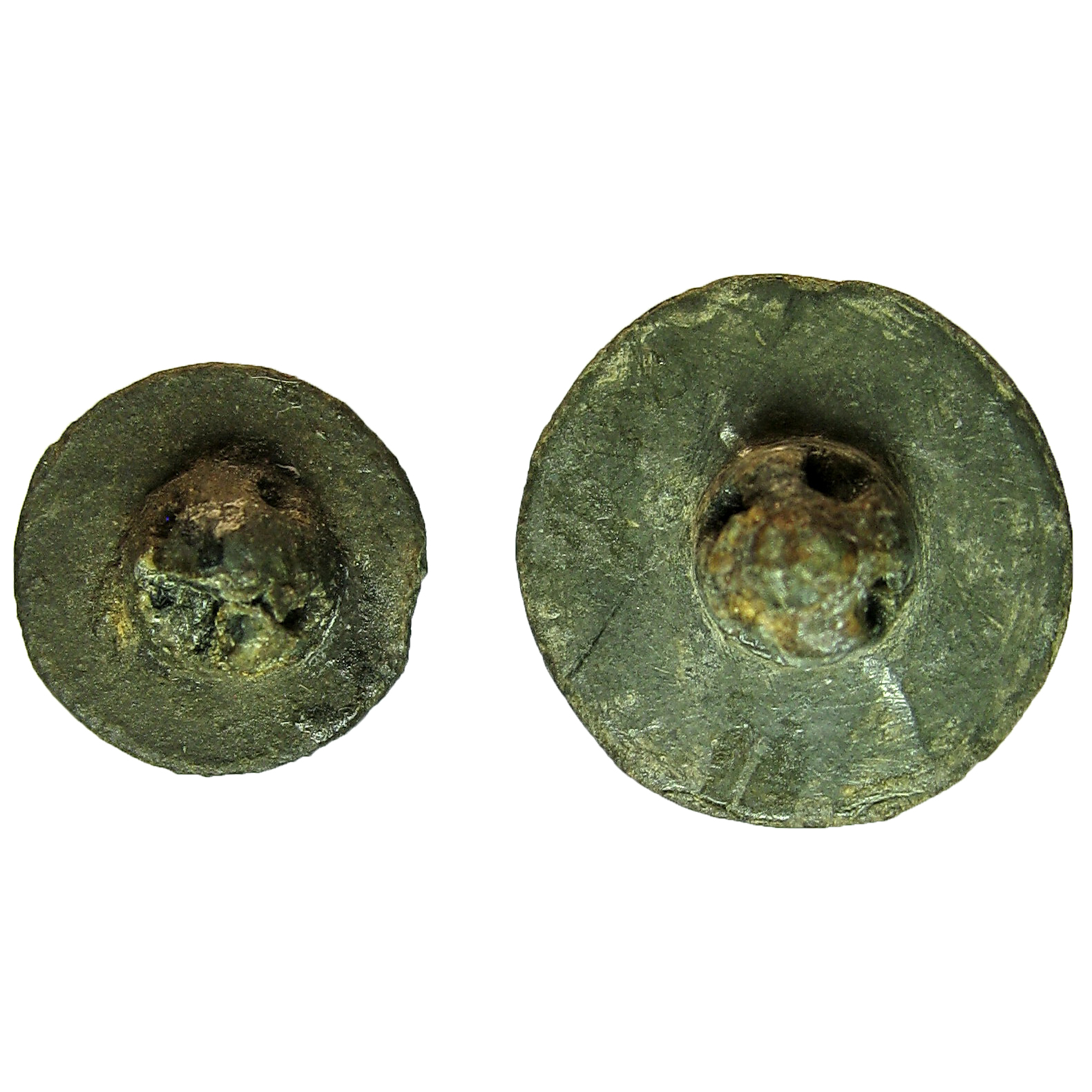
Metall Alloy Tin
Size 19 mm and 14 mm
Button made by casting into a metal mold. Picture on the button symbolizes two laurel branches, which honored the Roman legions, as a symbol of victory and glory.
Small regimental buttons with the number 3 and the word "Legion Portugaise" almost did not occur, so the rarity scale from 0 to 5, I think you can put R 4. Anyway buttons made of tin are almost always caught with broken edges or crumble in your hands. Small buttons having less mass and volume of the metal is much more active break and get a button in good condition is a great success. This happens because the so-called "tin pest." While tin buttons and other parts of ammunition made from tin just falling apart, becoming completely inaccessible to historians and collectors. Officers buttons are found only in single copies and evaluate their rarity can only theoretically.
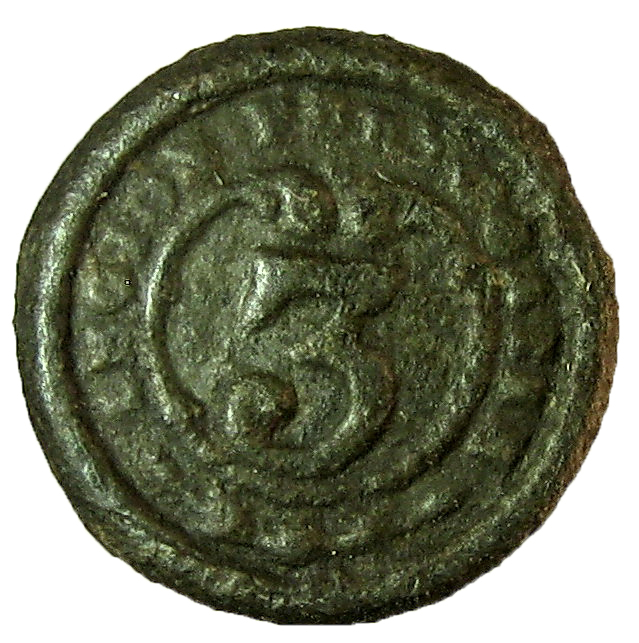
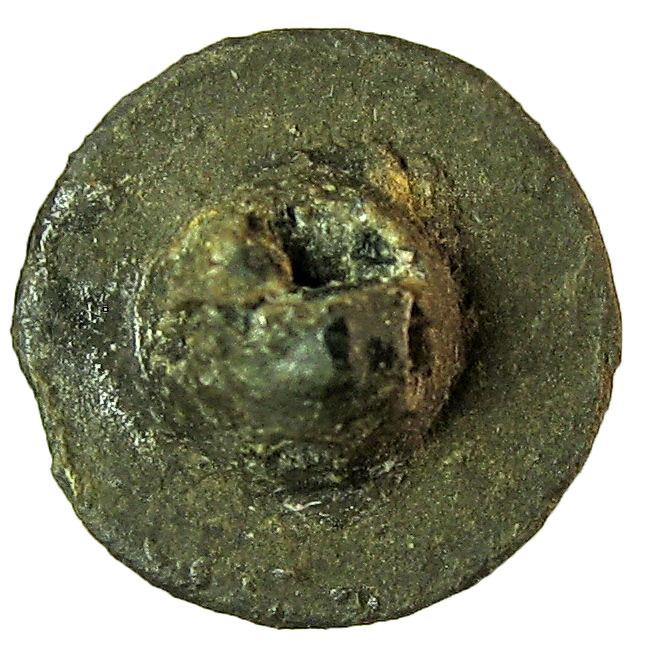
Button made by casting into a metal mold. Drawing on the button symbolizes two laurel branches, which honored the Roman legionaries, as a symbol of victory and glory.
Large buttons with regimental number 3 and the word "Legion Portugaise" are not very common, so the rarity scale from 0 to 5, I think you can put R 3. Anyway buttons made of tin are almost always caught with broken edges or crumble in your hands. This happens because the so-called "tin pest." While tin buttons and other parts of ammunition made from tin just falling apart, becoming completely inaccessible to historians and collectors. Officers buttons are found only in single copies and evaluate their rarity can only theoretically.
There are no reviews for this product.
No questions about this product.